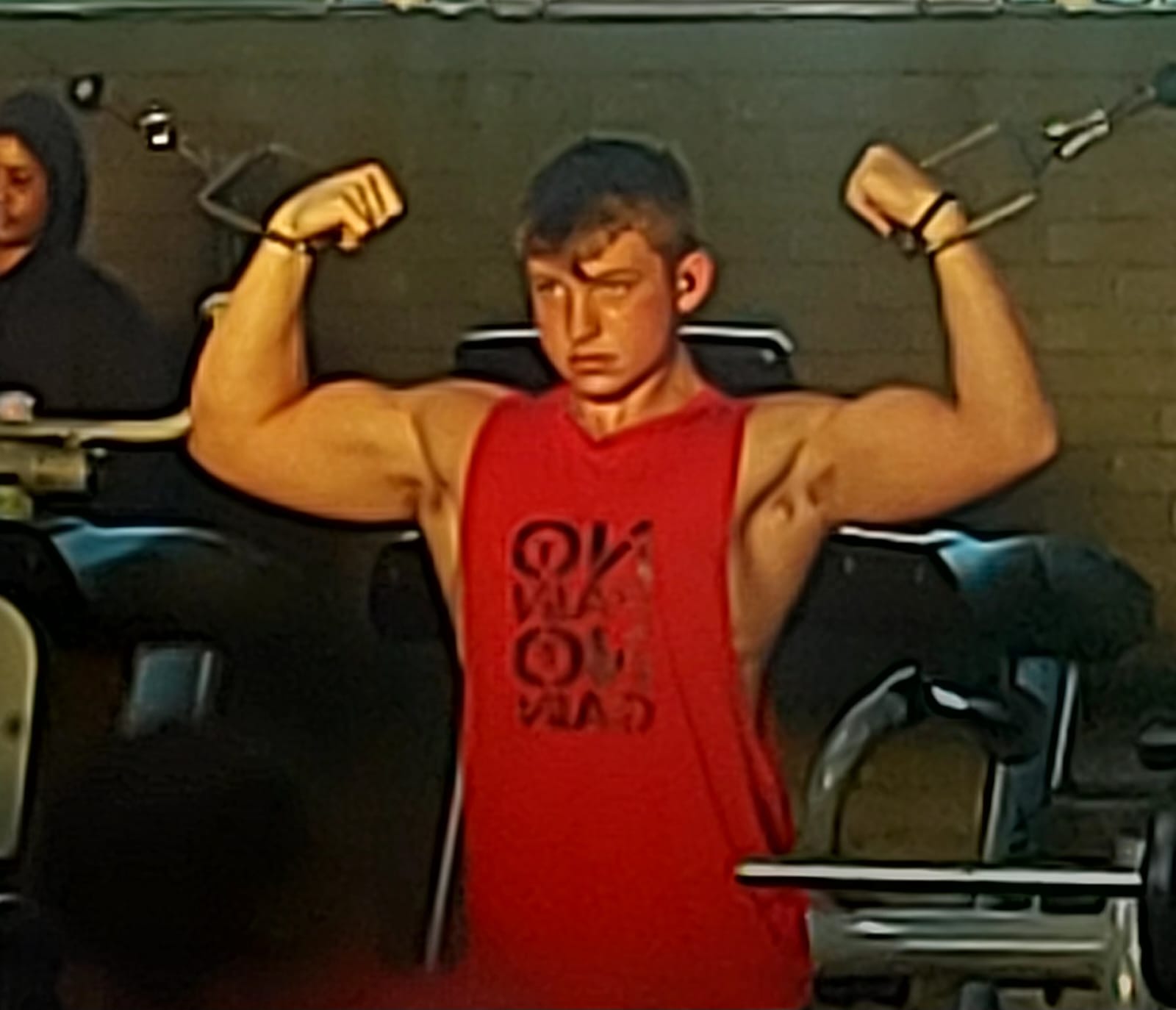
Model: G. Eisenberg
Anatomy, Proportions, Posture, and the Science of Growth
Behind every impressive physique lies an unseen framework: movement chains, posture, muscular architecture, and the invisible mindset that fuels transformation. Welcome to Part 2 of Symmetry Sessions, where we delve beyond surface aesthetics and explore the underlying mechanics of human development.
Gustav: A Case Study in Grit and Growth
At just 17, Gustav embodies what this series stands for—symmetry built on discipline, and aesthetics grounded in integrity. His story begins not with perfection, but with curiosity, commitment, and the wisdom to learn from discomfort.
“I enjoy the feeling after training, the pain and discomfort… knowing that the hard work I put in now will add up in the long run.”
From his strong leg development to a persistent struggle with chest growth, Gustav doesn’t shy away from imbalance—he leans into it. His training reflects self-awareness. He recognizes how inconsistent sleep and nutrition impacted his recovery and understands that true strength must be functional, not just visual.
“An impressive body must be lean, strong, and able to handle uncomfortable situations.”
What sets Gustav apart is his drive to inspire others, not from a place of superiority, but from shared imperfection. His willingness to be vulnerable while pursuing a “superhero look” transforms his physique into a message: that greatness is built, not gifted.
“I’m not perfect… but I believe I could set the example to others that it is possible. Your age or circumstances shouldn’t stop you.”
His story will guide others through our upcoming symmetry challenge, offering a mirror not just of form, but of courage.
Function Dictates Form
Training isn’t about isolated muscles; it’s about interconnected movement chains. Strong glutes support hamstrings; stable shoulders protect the spine. Poor alignment and underdeveloped links can lead to inefficient movement and increased risk of injury. Gustav’s keen observation of how his body feels under different conditions highlights exactly how form reflects internal function.
Proportions: Blueprint of Performance
Balance matters. A well-developed physique isn’t just beautiful—it’s biomechanically correct. Proportions help us identify weakness, prevent injury, and guide programming:
- Flexed biceps ≈ calves
- Neck > biceps
- Waist-to-shoulder ratio ≈ 0.75
- Thigh-to-waist ratio ≈ 1.3
Gustav’s awareness of chest lag and arm asymmetry is a perfect example of how measurement can guide mentorship. Through our assessment, athletes can map their own blueprint and adjust with purpose.
Posture: The Hidden Foundation
Slouched posture isn’t just a visual problem—it compresses lungs, disrupts breathing, and limits motion.
- A hunched back can reduce lung capacity by 30%
- Forward neck posture shifts breathing to the accessory muscles
- Pelvic misalignment impacts leg drive and spinal stability
Training symmetry starts with aligning posture. As Gustav found, sleep, diet, and recovery all feed into posture’s integrity. Fix the frame—your breath, movement, and power all follow.
Growth Styles: The Science of Muscle Development
Muscles grow in two key ways—and both are essential.
Myofibrillar Hypertrophy
- Strength and density
- Low reps, heavy weights
- Builds hard, functional muscle
Sarcoplasmic Hypertrophy
- Size and volume
- High reps, moderate loads
- Expands glycogen and cell fluid
Gustav’s chest might benefit from alternating both styles. By cycling through training phases, athletes optimize not only their appearance but also their performance.
The scale can’t see your symmetry. It can’t measure your strength. It doesn’t know how far you’ve come.
Progress isn’t always visible on the scale. Muscle weighs more than fat, and many athletes lose fat while gaining lean mass—yet the number barely moves. That’s why the mirror, the tape, and the movement tell a more honest story than the scale ever could.
To get accurate measurements:
- Use a flexible tape and measure at the widest or most anatomically relevant points.
- Ask a personal trainer or a trusted friend for help, especially with hard-to-reach areas like the shoulders, flexed biceps, or glutes.
- Measure both sides of the body to identify asymmetries.
- Record your data consistently—same time of day, same posture, same tension.
And here’s the good news: Edge Fitness Clubs has partnered with us to offer free body assessments to anyone living near one of their 11 South African locations—even if you’re not a member. Click the link below to book your appointment and get professional insight, and start your symmetry journey with expert support.
“Your Symmetry Word”
“If your physique had a theme word—what would it be right now?” Examples: Unbalanced, Powerful, Underrated, Evolving
🧩 Want to inspire others on the same journey? Share your measurements, your symmetry word, or your flex challenge photo using #SymmetrySessions and tag @TheWolfsLairMag. Let’s redefine what progress looks like—together.
Your Symmetry Starts Here
The Symmetry Assessment Form, where athletes like Gustav will lead by example. You’ll submit your measurements, receive left/right comparisons, growth suggestions, and nutritional guidance tailored to your phase.
It’s not just a test—it’s a mentorship map.
Inspired by Gustav. Designed for everyone.
Measurement Tips: Read Your Body, Not Just the Scale
🔮 Coming Soon: Part 3 – The Engine Inside
In the next chapter of Symmetry Sessions, we’ll explore the physiological engine that drives your transformation:
- How your body adapts to stress
- The role of recovery, sleep, and hormonal balance
- Why training intensity must match your phase of growth
It’s not just about what you do—it’s about how your body responds. The Engine Inside will teach you how to fuel, recover, and evolve with purpose.
About the Author